
Combinatorial algorithms
Instead of simple sorting for optimized transport orders.
Reduce the walking distance for picking and equalize the load throughout your warehouse while still keeping the cut-offs for your orders.
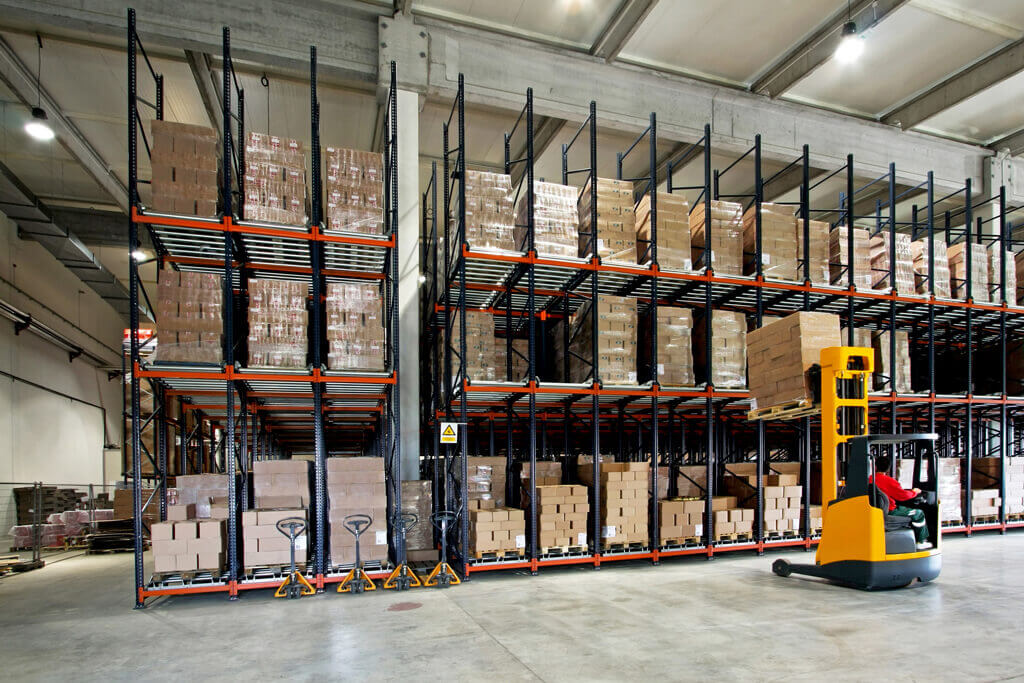
Instead of simple sorting for optimized transport orders.
Considering both automated and manual sections holistically.
In consolidation areas and storage areas through appropriate sequencing of replenishment and picking orders.
Through sensible combination of orders in multi-order picking.
With simultaneous reduction of processing time through correct wave sizes and avoidance of bottlenecks.
Via SAP or database connector or RESTful APIs.
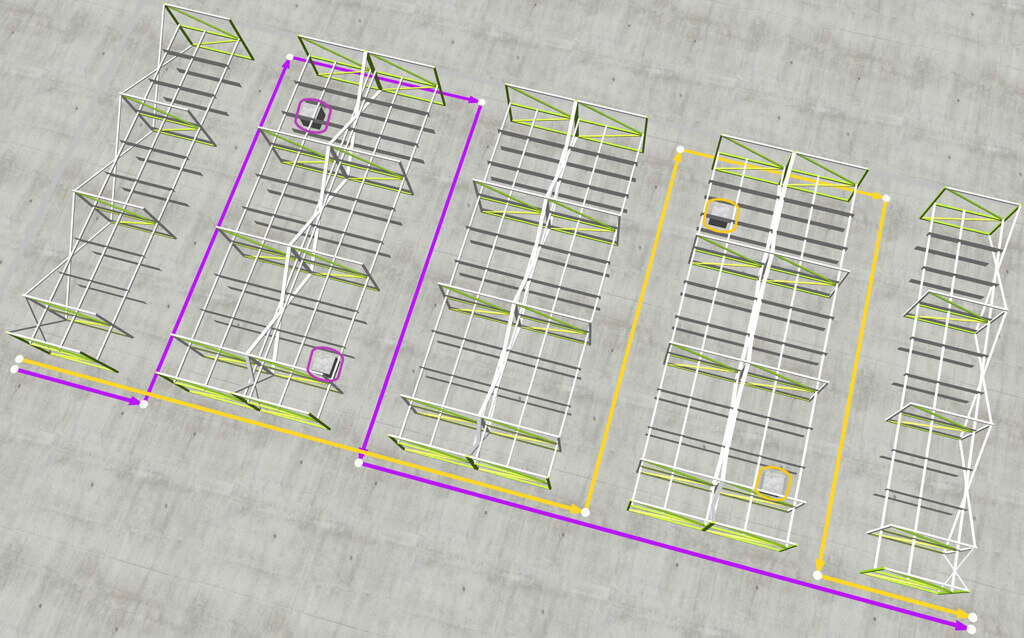
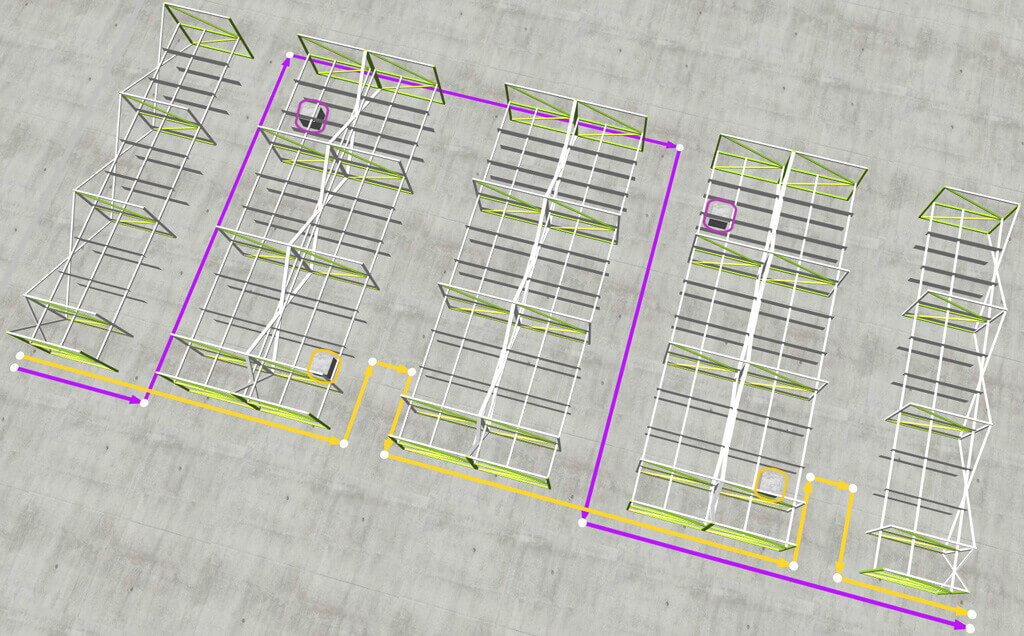
The efficiency of multi-order picking processes depends on the correct sequence and configuration of the orders. On the one hand, this multi-order picking process aims to minimize the effort required for order picking. On the other hand, restrictions such as departure times and workload on packing stations must be considered. Time-consuming optimization runs, which may take place overnight, are no longer necessary. Despite the availability of large amounts of data and the complexity of individual restrictions, the situation must be reassessed frequently. W2MO meets this challenge with state-of-the-art combinatorial optimization technology and algorithms, resulting in picking tours with shorter distances and no traffic jams due to equal load distribution. It is not sufficient to minimize path lengths for single tours. Instead, the total amount of all required picks must be considered to avoid having one long tour as the “cost” of another very short one.
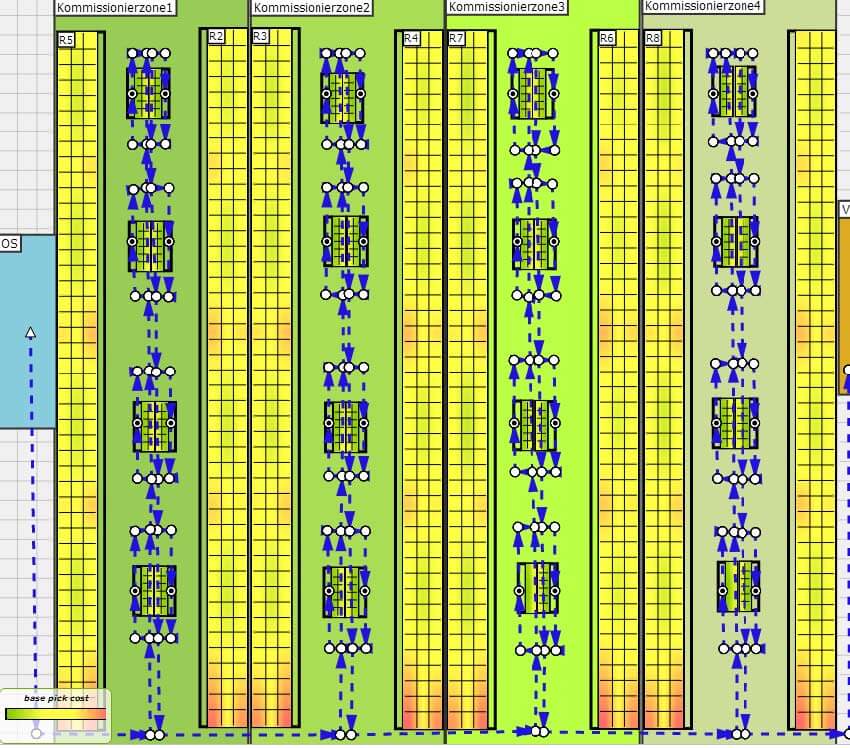
The objective of optimizing the order sequence is twofold: to ensure timely delivery and to enhance the productivity of employees and machines by reducing downtime. The Digital Twin of the distribution center enables the estimation of the expected workload to complete an order. This is achieved by considering personnel and machine resources, system performance, and picking and transport speeds. Based on these factors, a suitable start time window for the order can be determined. Buffer and consolidation areas should be evenly utilized and a coordinated combination of different storage areas should take place. With the integration of the online workload preview it is possible to detect early on if the scheduled deliveries cannot be processed with the available resources in the specified time. Re-prioritization can then be carried out.
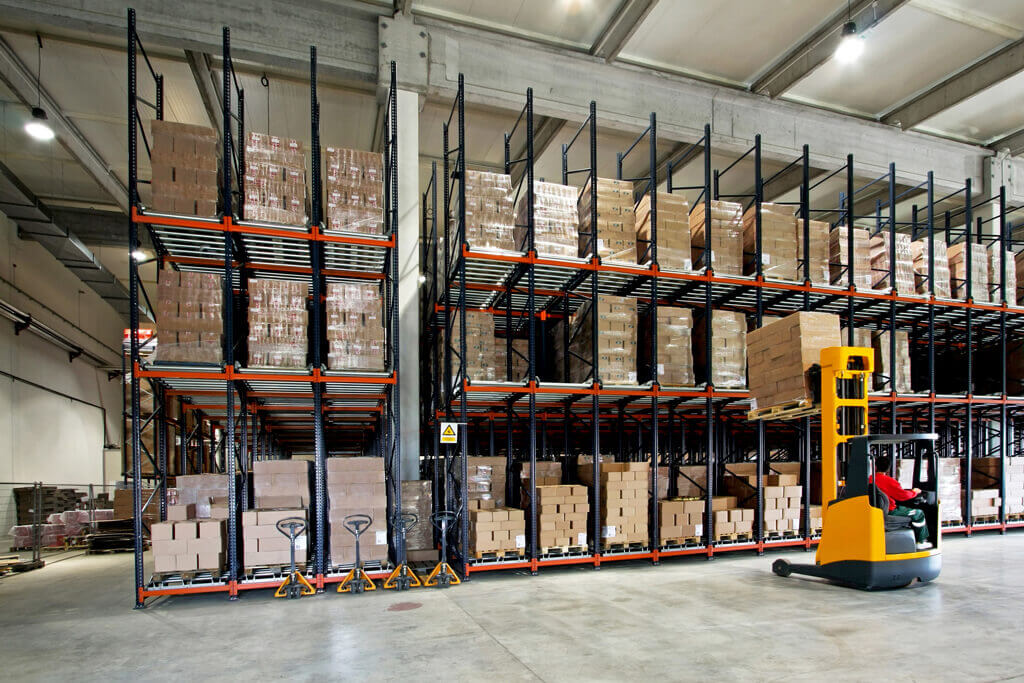
Volatile demand represents the most significant challenge in picking and replenishment processes, frequently resulting in temporary peaks in replenishment that may exceed the maximum supply chain capacities. Replenishment systems must therefore rely on intelligent concepts and algorithms capable of fulfilling the needs of highly dynamic material flows. In this regard, W2MO offers tailored solutions and modern calculation methods that guarantee durable and punctual delivery capacity through range-driven target stock calculation and prioritization of replenishment order sequences. This also results in a reduction of picking efforts, as incorrect picks are avoided. An optimal bin assignment can also be calculated with consideration of picking and replenishment times. Replenishment bottlenecks can be smartly avoided when under-load times are being used purposefully for replenishment precautions. W2MO and its intelligent algorithms can identify articles that will most certainly be demanded in the near future.
Talk to one of our experts.