
Warehouse Capacity Optimization.
Optimize the storage capacity of your warehouse and improve its structure — without building a single new square metre.
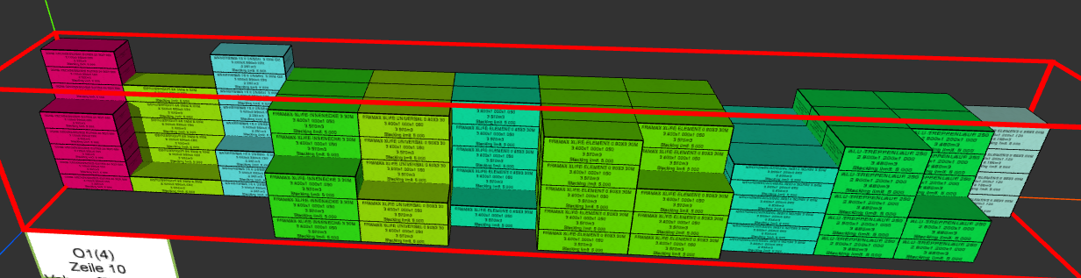
Perfect bin dimensioning
Calculated with packing algorithms that consider every product property.
Process change simulation
For efficient implementation — see the impact before you move a pallet.
Optimal area placement
To maximize the use of your warehouse footprint.
Structure optimization
For block storage areas, indoor or outdoor.
More pallet positions from the same building.
Higher utilization in block-stack areas.
More pallets handled per hour.
Optimal dimensioning of storage areas.
- Optimize bin sizes based on inventory data and product properties
- Use packing algorithms to find the right bin dimensions
- Flexible constraint definition and fast impact analysis
- Low project cost, high return
- Works for block areas and rack storage alike
Ongoing supply-chain disruption is pushing inventories up — and with them the need for more storage capacity. Building new halls is one option. Using the space you already have, better structured, is the more economical one.
W2MO Capacity Optimization makes slot-size optimization straightforward. Packing algorithms consider every relevant product property — dimensions, weight, stack factors, compressibility — and compute the optimal size for each area or bin. Whether you store products individually, mixed, or have batch-separation constraints, W2MO finds the right configuration.
The same sizing logic applies to block-storage areas and to rack structures. Realising the gains in a block warehouse (indoor or outdoor) is simple: adjust the floor markings and redefine storage locations in your WMS. The assignments produced by the optimizer feed directly into your product placement — read more in our Advanced Slotting section.
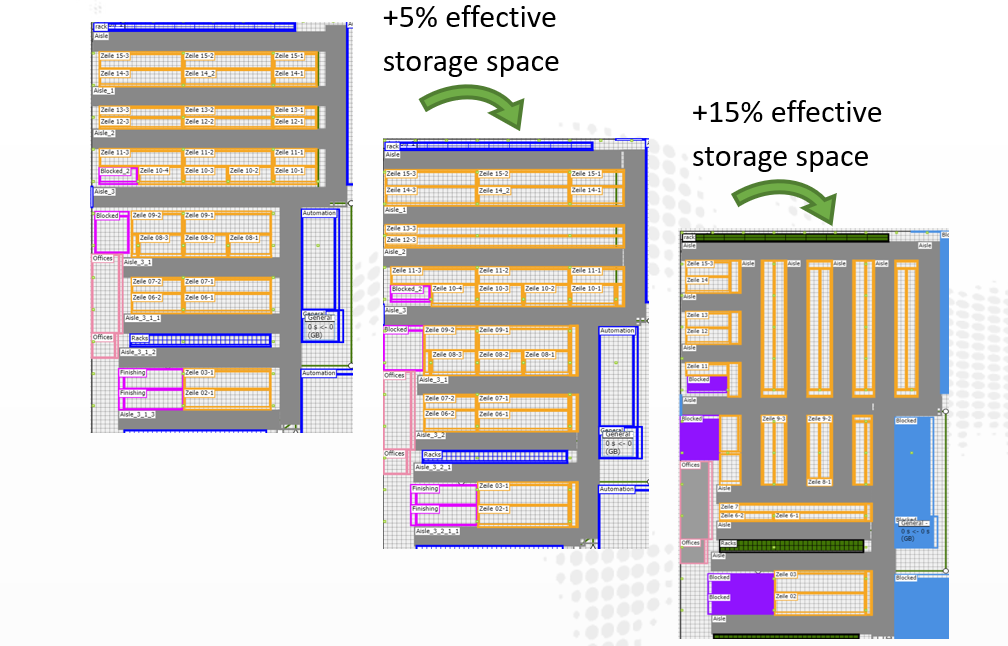
Structure optimization.
- Reorganise block-storage areas to free up space
- Respect storage restrictions and minimum-space requirements
- Lift effective storage utilization and rack-capacity usage by up to 20 %
- Improve operational efficiency through better warehouse management
Capacity optimization starts with computing optimal slot sizes from product properties, inventory data, demand behaviour and the rest of your constraints. Step two places those optimally sized storage needs efficiently across the warehouse, so that effective capacity is maximised.
Minimum aisle widths, block areas and process constraints all feed into the resulting layout. Across typical projects, W2MO Capacity Optimization lifts net storage capacity by 6–25 %. In a mid-sized warehouse with 5,000 pallet positions, that means over 1,000 additional positions. At a typical "overnight cost" of €3 per pallet, you're looking at €3,000 saved per day — over €1 M per year.
Process simulation.
- Simulate process and structural changes
- Surface bottlenecks and congestion before they happen
- Improve overall process flow
- Evaluate the impact of transport modes — 2-fork vs. 4-fork trucks, or AGV deployment
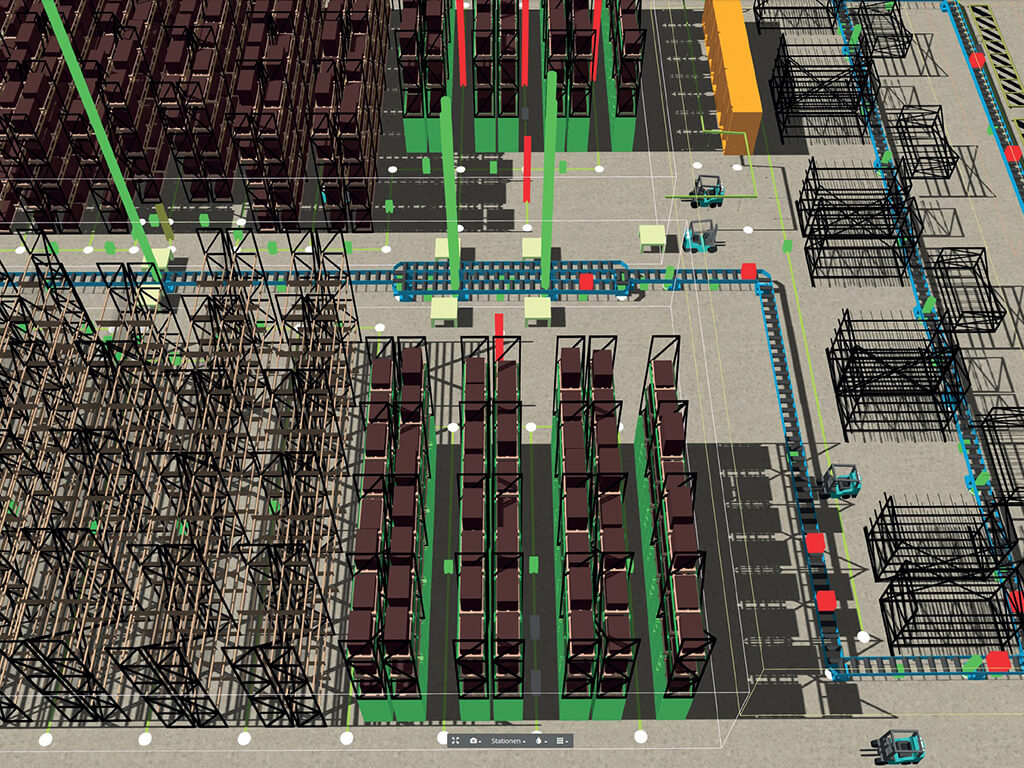
Once a new structure has been built, the W2MO Digital Twin shows how that structure will play out in your processes. Simulate and analyse the new layout to understand workload, bottlenecks and congestion situations. Keep optimizing, re-run the simulation, and see the impact — everything in one tool. Read more in our Simulation section.
Simulation also helps you pick the right transport equipment for the new structure. Whether you want to compare a 2-fork truck against a 4-fork one, or check whether an AMR would pay off, change a few parameters in the Digital Twin and watch the impact on effort and capacity unfold.
Curious how much capacity is hidden in your existing warehouse?
Talk to one of our experts.